Pick locations that actually pay.
What I look for before I'll sign a contract — foot-traffic minimums, building access, and the questions to ask the host.
A Field Report from Fort Bragg, NC
Here's how the math actually worked — including the parts the vending gurus skip.
01 / The Story
I followed one of them in 2022. He sold a course for $997 that promised four-figure monthly checks for two hours of work a week. The numbers in his ads were real — for him, mostly because he was selling courses, not running machines.
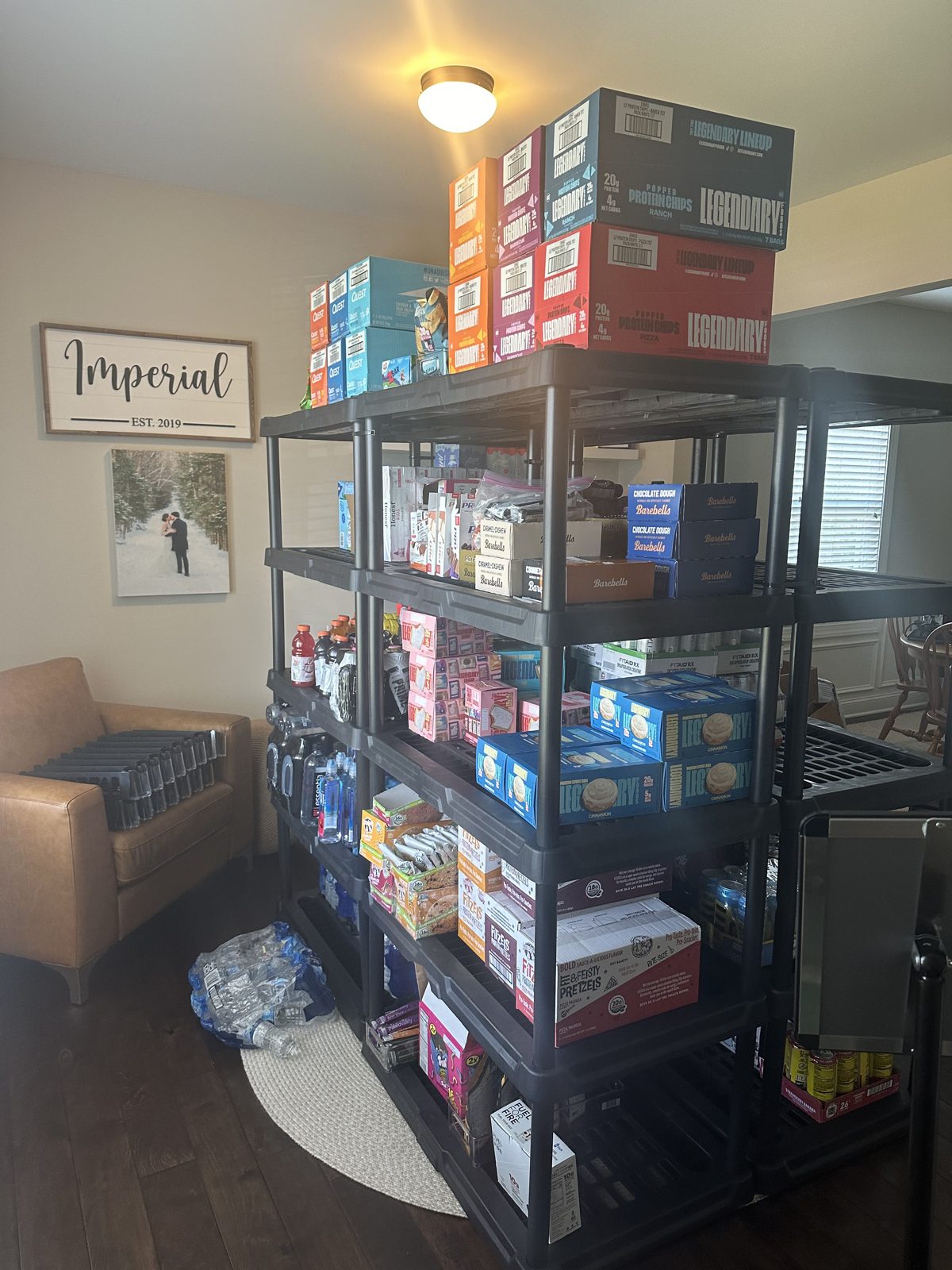
The pitch was passive income. The reality was multiple vending routes, a warehouse in my living room, a card reader that continuously froze, and a cooler in Southern Pines that wouldn't hold temperature in August.
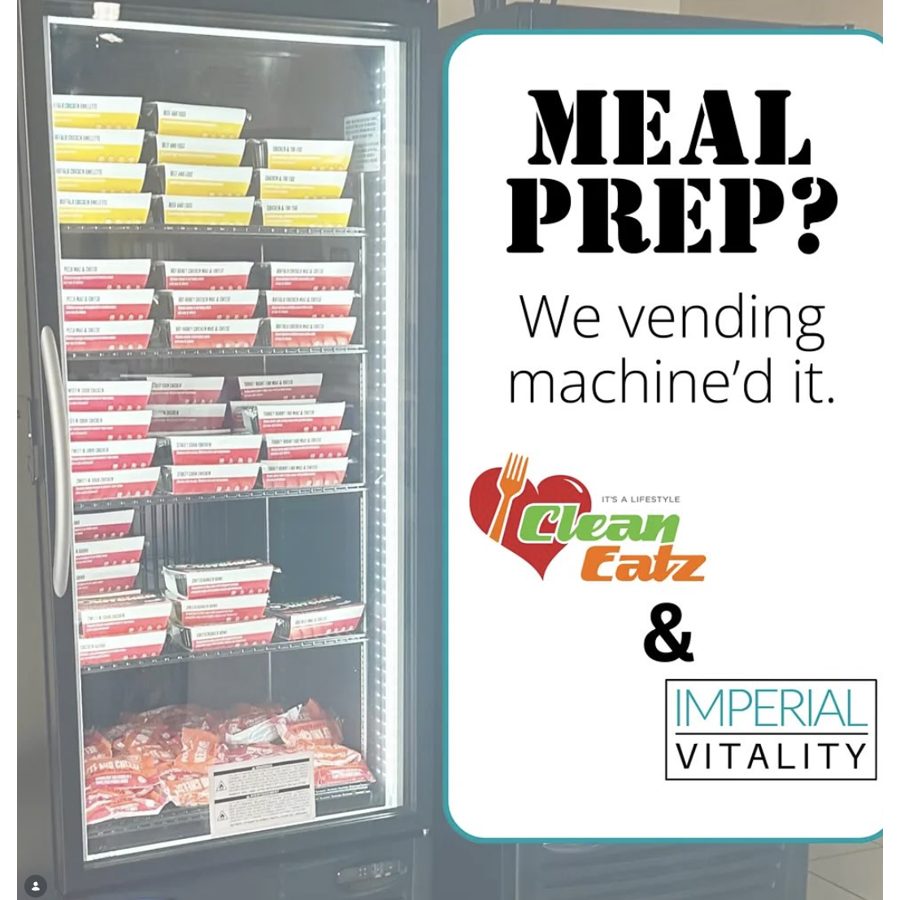
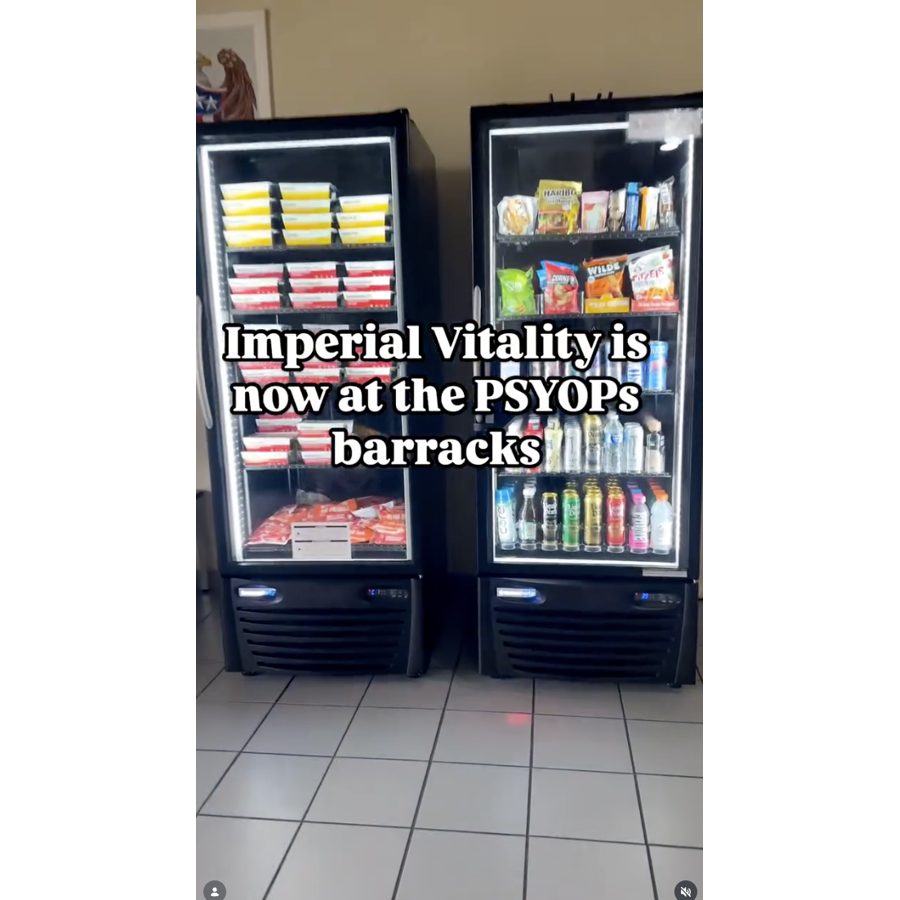
The gap I actually saw was on post. Soldiers were walking past rows of Cheetos and Mountain Dew on installations full of people who lifted six days a week and read the back of every label. So I built something better — a glass door black cabinet, LED-lit, stocked with Barebells, Built Bars, protein shakes, electrolytes, and Clean Eatz frozen meals.
It's not passive income. It's an active business that paid for itself in a year and a half — and that's a much better story.
First machines went into several gyms in Southern Pines. I priced items wrong, stocked it wrong, and forgot the Apple Pay decal — sales for the first week were underwhelming. Six weeks later we were clearing $1,800 a month. Each cooler got better and made up for the previous one's mistakes.
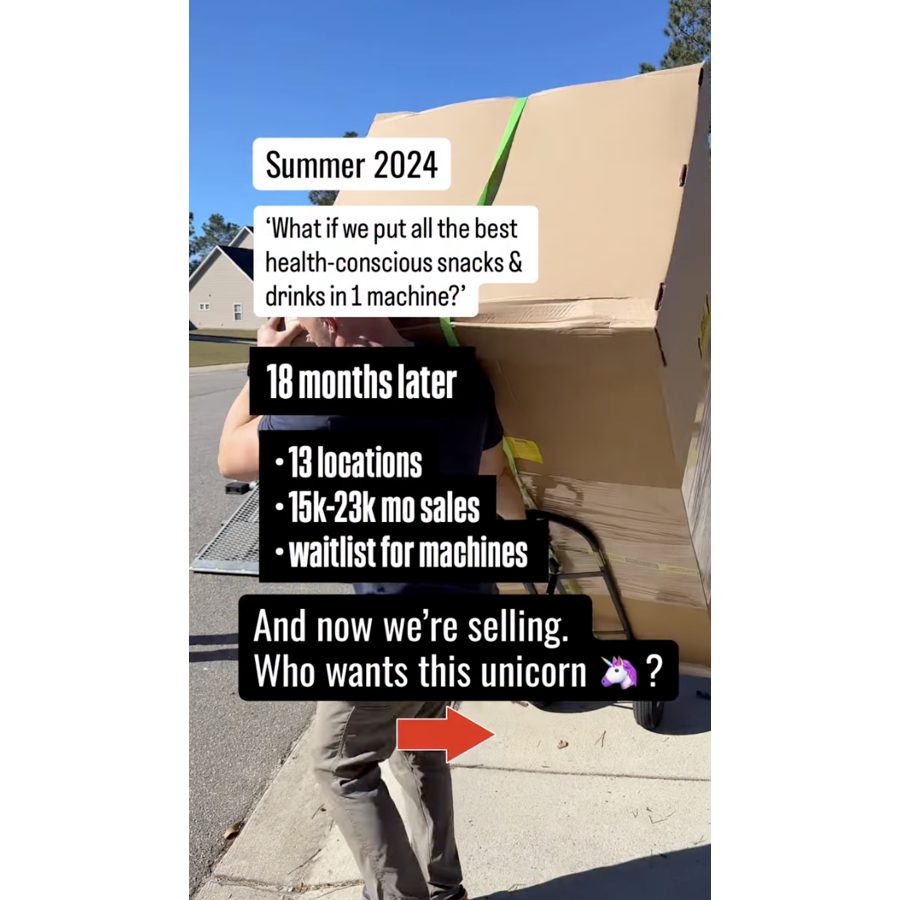
By month fourteen we were at 13 locations — gyms, barracks, unit HQs — pulling north of $250k a year, with four 1099 drivers and a waitlist of property managers asking when I could put one in their lobby.
I sold at month eighteen. Not because it was failing — the opposite. Bigger things were waiting, and the smart move was to package this one cleanly and hand it off. The buyer got a business with real financials and SOPs. I got a check and my Saturdays back.
02 / What's in the guide
Six chapters, written in the same language I'd use at a kitchen table. Real numbers where round numbers usually go. No filler.
What I look for before I'll sign a contract — foot-traffic minimums, building access, and the questions to ask the host.
New vs. used, the brands worth the money, and the hidden fees nobody tells you about until the invoice shows up.
Apple Pay, Google Pay, what the processors actually charge, and the trap most operators fall into in the first month.
How I structured restocks so the business stopped owning my Saturdays — without dropping in-stock rates.
How I found four 1099 drivers, what I paid them, and the systems that kept the routes running while I was away for training.
What it took to package it for a buyer — the financials, the SOPs, the handoff plan. Most operators never plan for this. I did from month one.
03 / Waitlist
Early subscribers get founding-member pricing and a bonus chapter on selling the business.
04 / Who this is for
You're tired of side-hustle content that hides the real numbers.
You want a business you can actually run from where the Army sends you — or where life has you anyway.
You'd rather know the hard parts upfront than get blindsided three months in.
You're looking for passive income. This isn't that.
You want a guru to motivate you. I'm in the blueprint business, not the motivation business.
You're not willing to do the unsexy operational work — packing bins, fixing card readers, driving routes.
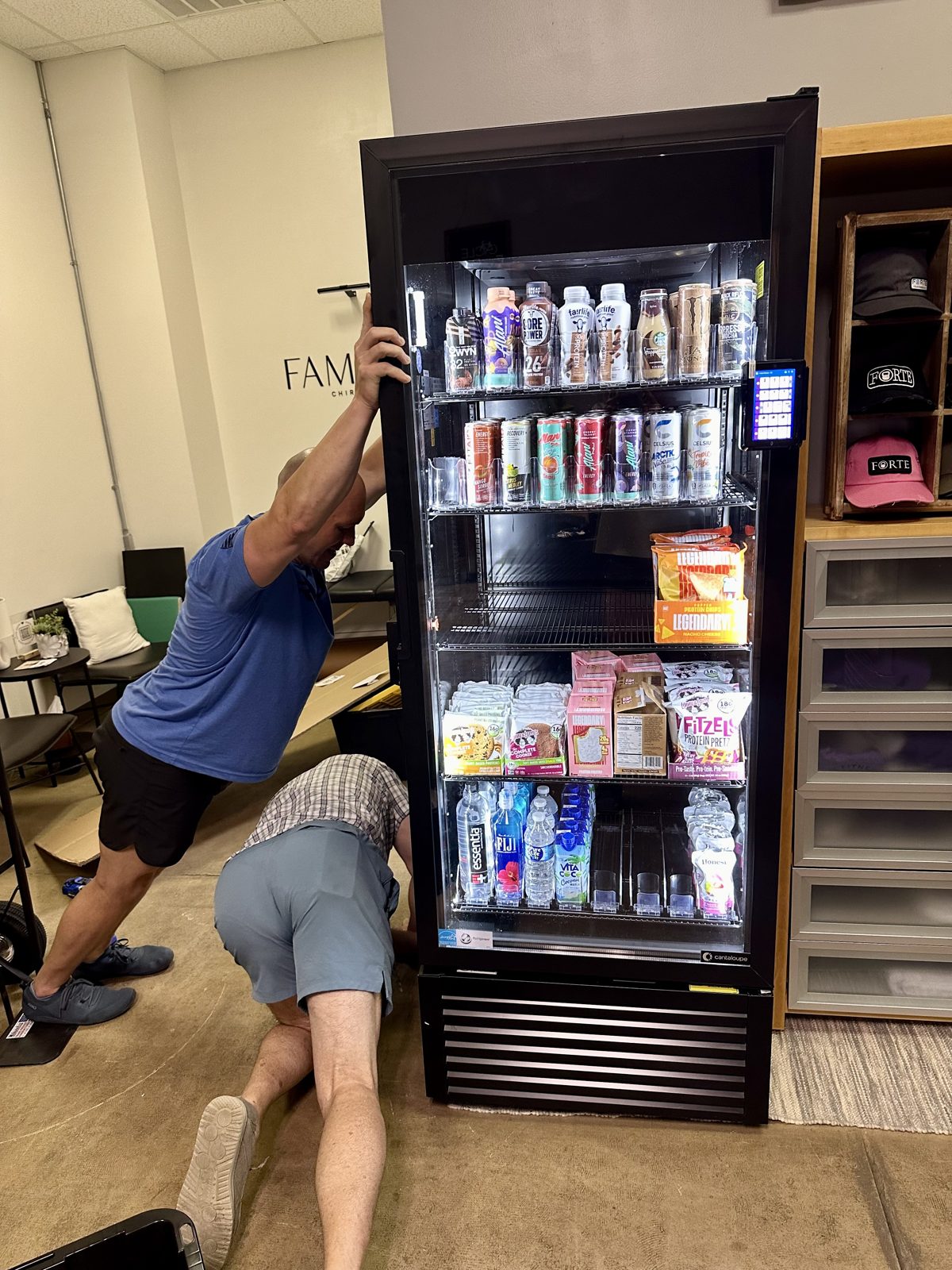
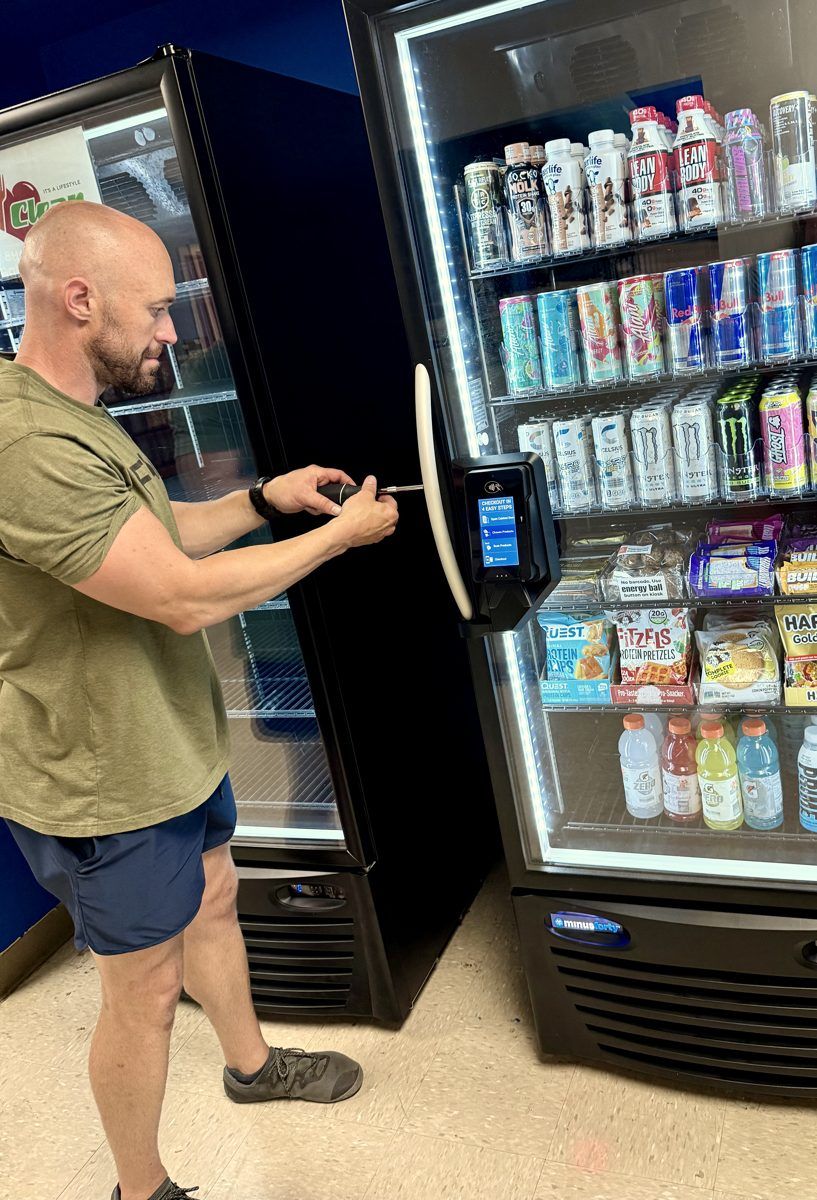
Completing an install at a unit HQ on Fort Bragg, NC.
05 / The founder
I'm a husband, a dad, and a guy with ideas. I didn't grow up around small businesses — entrepreneurship came later when it hit me that a fixed income wasn't going to get me to my financial goals — I'm still passionate about the Army, which is where most of the time goes.
Imperial Vitality started because the vending machines on and around post were full of food the people using them didn't want to eat. My wife and I built it together around deployments and training rotations, machine by machine, until it was running 13 locations and we could see the door at the other end.
I'm writing this guide because most of the content in this space is inflated, and I keep meeting people who'd be great at this and got scared off by the guru nonsense. The work is the work. If you know what you're walking into, this is one of the better small businesses you can buy yourself a way out of a W-2 with.
— I'm just a guy seizing opportunities as they arise and building things.
06 / Follow along
07 / Questions
If yours isn't here, write back to the waitlist email when it lands — I read those.
No. The model works anywhere there's a captive audience — gyms, office parks, schools, military posts. Military installations happened to be where I had the unfair advantage.
I'll cover the real number in the guide. Anyone who tells you a single round figure without asking about your locations or your machine choice is selling you something.
That was me. The guide is written for someone starting from zero. It's also why I lead with what the work actually looks like — so you can decide before you spend money.
No. I want to be the last person to ever lie to you about that.
I'm writing it now. Join the waitlist and you'll be the first to know — one email, when it drops.
The guide is the main thing. A small membership community is on the roadmap if there's demand for it. I'd rather build it because people want it than charge for it because that's where the margin is.
Yes. I did, with deployments and training rotations. The guide covers the systems and the contractor setup that made it possible — that's the whole reason I'm bothering to write it.
Yes. Most vending content stops at "and then you have a business." Mine starts with the assumption you might want to exit it cleanly — and walks through how I packaged mine for a buyer.
Last stop
One email when the guide drops. No teaser sequences, no urgency theater.